Skin Tag Removal Birmingham

Doctor-Led Skin Tag Removal in Birmingham

If you have skin tags that catch on clothing, bleed when shaving, or simply make you feel self-conscious, The Doctors Practice in Birmingham offers safe, quick, and effective skin tag removal carried out personally by experienced GPs.

CQC-Registered-Birmingham-Medical-Clinic (2)
GMC Doctors Birmingham
5 Star Private Medical Clinic

Skin Tag Removal Procedure Birmingham

All skin tag removal treatments at The Doctors Practice are performed by Dr Bik and Dr Rinku in our CQC registered clinic in Edgbaston, Birmingham. Unlike  DIY removal kits, every procedure here is doctor-led from start to finish, ensuring patient safety remains the priority throughout. 

Most patients find that their skin tags can be assessed and removed in one session, with minimal downtime and tailored advice provided before you leave. Whether you have a single troublesome tag on your neck or multiple tags in areas where skin rubs against clothing, our clinic can help. We use the latest technology for skin tag removal to ensure treatments are safe, effective, and comfortable.

Treatment Details

Procedure Time

20-30 Minutes

Anaesthetic

Local anaesthetic

Downtime

Usually minimal

Follow-up

If needed

Consultation

£69 consultation (redeemable if patient proceeds with surgery)

Treatment

Procedures from £99

What Is a Skin Tag?

A skin tag, known medically as an acrochordon, is a small, soft, benign growth that hangs off the skin on a thin stalk. These skin growths are extremely common and affect roughly half of all adults at some point in their lives. They are completely harmless from a medical perspective but can become a nuisance in daily life.

Skin tags typically measure between 1mm and 5mm in diameter, though some grow larger over time. They most commonly appear in areas where skin folds create friction, the neck, armpits, groin, under the breasts, along bra straps, and around the waistband. If you have noticed small, flesh-coloured or slightly darker bumps in these locations, there is a good chance you are dealing with skin tags rather than moles or warts. 

How it Works

Skin Tag Removal Benefits & Suitability

Skin Tag Removal

Skin tag removal at The Doctors Practice is suitable for most adults who have one or more tags causing irritation, discomfort, or cosmetic concerns. The most common patients we see are those with tags on the neck, armpits, eyelids, groin, under the breasts, or along the waistband, areas where clothing or jewellery frequently catches and causes problems.

People seek professional removal for a wide range of reasons. You might be tired of your collar rubbing against a cluster of tags on your neck every time you wear a shirt. Perhaps you have cut yourself shaving around tags in your armpit one too many times. Athletes often come to us with tags that have become irritated from underarm friction during exercise, while others simply want to address multiple tags in visible areas for cosmetic reasons.

There are some situations where immediate removal may not be appropriate without further investigation. If a growth has changed rapidly in size, developed an irregular shape, or shows unusual colour variation, our doctors will discuss whether additional assessment or histology is needed before proceeding. This careful approach protects you from any risk of misdiagnosis and ensures we only treat lesions that are clearly non cancerous growths.

If you are taking blood thinners like warfarin or aspirin, have diabetes that affects wound healing, or have any condition affecting your immune system, Dr Bik or Dr Rinku will discuss a tailored plan during your first consultation.

When you arrive at The Doctors Practice private GP and aesthetic clinic in Edgbaston, our reception team will greet you and complete a brief registration process. You will then be shown to a private consultation room where you will meet with either Dr Bik or Dr Rinku.

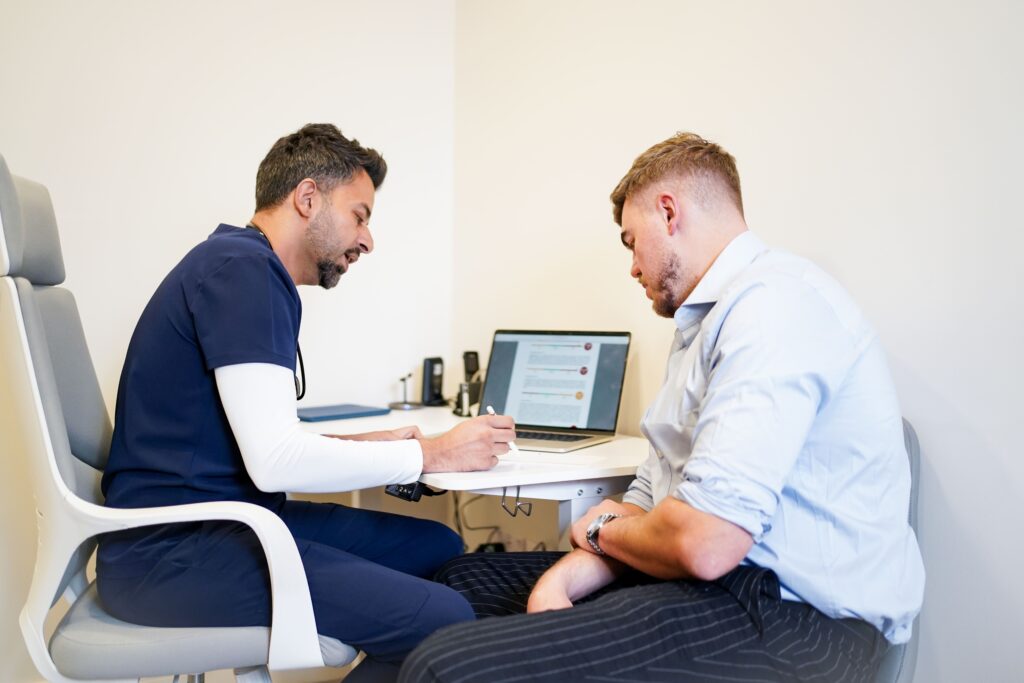
Your appointment begins with the doctor examining your skin tags carefully. They will assess the appearance of each one, checking that they have the typical characteristics of benign growths rather than anything that might need further investigation. This is also your opportunity to discuss any concerns, mention relevant medical history, and ask questions about the treatment options available to you.

Once the doctor feels confident that your tags are suitable for removal, they will discuss treatment options and explain which method they recommend for each tag. You will receive a clear cost breakdown before any treatment begins, so there are no surprises.

If you are happy to go ahead, removal can often take place immediately after the consultation. There is no need to book a separate appointment unless you prefer to do so. The doctor will talk you through each step as they work, from applying the local anaesthetic to carrying out the removal and applying any dressings. You are welcome to ask questions at any time, and if you are feeling nervous, both Dr Bik and Dr Rinku are experienced in helping anxious patients feel at ease.

Before you leave, you will receive clear aftercare instructions to support your healing process and help achieve the best possible cosmetic outcome. The whole journey—from walking into the clinic to leaving with your skin tags removed—typically takes under an hour for most patients.

Why Patients Trust Us

Skin Tag Removal

CQC Regulated

Skin Tag Removal

Expert Doctors

Skin Tag Removal

5 Star Clinic

Over 200 5-Star Google Reviews

Skin Tag Removal

Clinical Setting

Safe & Luxurious Clinic Rooms

Skin Tag Removal

Same Day Appointments

Evening & Weekend Availability

Skin Tag Removal

Transparent Pricing

From £99

Meet Our Doctors & Explore Our Clinic

As a CQC regulated, doctor-led clinic based in Edgbaston, The Doctors Practice provides a level of expertise and safety that sets us apart from non-medical providers. We serve patients from across Birmingham and surrounding areas including Wolverhampton, Walsall, Solihull and Sutton Coldfield.

Dr Bikram Ratti
Dr Rinku Ratti

Patient Trust and Reviews

Skin Tag Removal

In addition to skin tag removal, our clinic offers expert care for a range of skin concerns, including mole removal and the treatment of other skin growths. Our experienced doctors use advanced techniques to ensure minimal discomfort and scarring, providing peace of mind for patients who may be worried about the appearance or nature of their skin lesions.

Most patients recover quickly after skin tag removal and can return to normal activities straight away. The recovery time is minimal, as the procedure is minimally invasive and most people experience only a brief and straightforward healing process.

The treated area may feel slightly sore or appear a little red for the first day or two, but this is entirely normal and settles quickly. If you experience any discomfort, over-the-counter paracetamol is usually sufficient.

A small scab or crust will form where each skin tag was removed. This is part of the natural healing process and should be left alone to fall off on its own, typically within 7 to 10 days. Picking at the scab can delay healing and increase the risk of scarring, so resist the temptation to touch it.

Our doctors will provide you with detailed aftercare instructions before you leave the clinic. General guidance includes keeping the area clean and dry for the first 24 hours, after which you can wash gently with mild soap and water. During the healing period, you should avoid swimming pools, saunas, and sunbeds, as these can introduce bacteria to the wound or cause irritation. Any dressings or steri-strips should be kept in place for the recommended time and you should avoid shaving directly over the treated area until fully healed.

It is normal to notice some localised tenderness, minor oozing, or itchiness around the site, particularly between days 3 and 5.

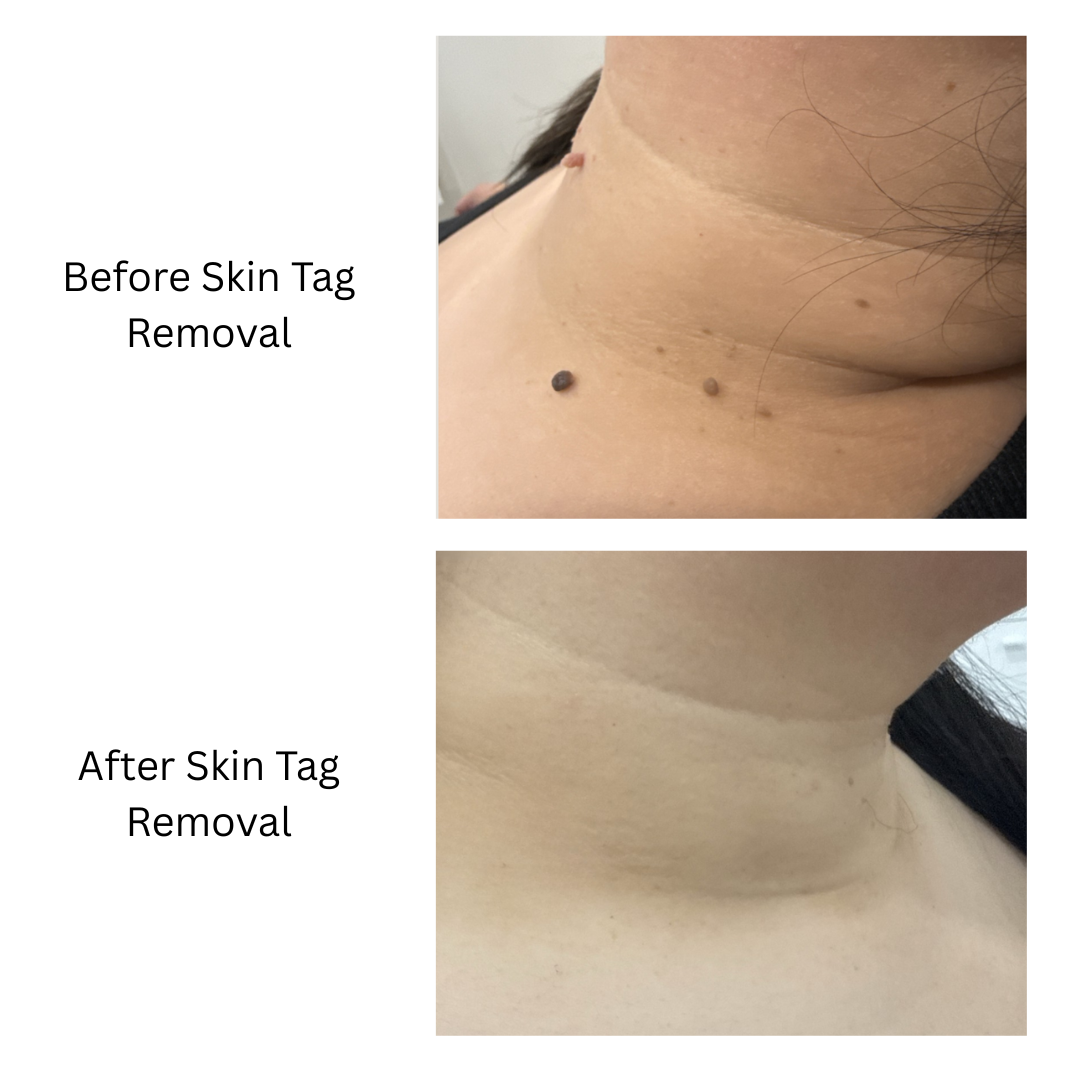
Scarring is usually minimal, especially when tags are removed by experienced doctors using appropriate techniques. For visible areas like the face, neck, or décolletage, Dr Bik and Dr Rinku take particular care to achieve the best cosmetic result, using methods that align with natural skin tension lines. Most patients find that any mark fades to become barely noticeable within three to six months.

The skin tag removal procedure itself should not be painful. Before any removal, we apply local anaesthetic to numb the area completely. The injection causes brief stinging that lasts a few seconds, but once the anaesthetic takes effect, most patients report only feeling slight pressure during the procedure. Any discomfort after the anaesthetic wears off is usually mild and manageable with standard painkillers.

FAQs

Skin tag removal costs £99 but this may vary depending on the number of tags being treated. At your consultation, Dr Bik or Dr Rinku will examine your tags and provide a clear quote before any treatment begins. 

Yes, we can remove multiple tags in one session. In fact, this is often the most practical approach if you have several tags causing problems. Our appointments are scheduled to allow sufficient time for treating more than one area, and addressing everything in a single visit means only one period of healing rather than several. During your consultation, the doctor will advise whether all your tags can be dealt with together or whether a staged approach would be preferable.

Skin tags on the face and eyelids can be removed safely by our doctors, who take particular care with these delicate areas. Eyelid tags require precise technique to avoid any damage to surrounding structures, and Dr Bik and Dr Rinku have the experience needed to achieve good results with minimal scarring. If you have tags affecting your makeup application or making you self-conscious about your appearance, we can help.

No. You can self-refer directly to The Doctors Practice without needing to see your GP first. Simply book an appointment online or call our reception. If you do have a GP referral letter, bring it along, but it’s not required for us to see you.

For most small to medium skin tags, stitches are not required. The wound left after removal is typically small enough to heal naturally, often with just a dressing or steri-strip to protect it during the initial healing process. Larger tags or those removed by surgical excision may occasionally benefit from a simple closure, but your doctor will discuss this with you beforehand if it applies to your situation.

Yes, most patients can drive themselves home and return to work immediately after their appointment. The local anaesthetic affects only a small area of skin and does not impair your ability to drive or concentrate. The only exception might be if your tags are located close to the eyes or eyelids.

We strongly advise against using home removal kits, tying off tags with thread, or cutting them yourself. These methods carry significant risks of infection, excessive bleeding, incomplete removal, and scarring. Without proper medical assessment, you also cannot be certain that what you are removing is actually a benign skin tag rather than another type of skin lesion that needs different management. Professional removal by a doctor is safer, more effective, and typically heals with better cosmetic results. Some people who attempt home removal end up needing medical treatment for complications, which costs more and causes more distress than having the procedure done properly in the first place.

No, skin tags are not cancerous and do not turn into skin cancer. They are benign growths made up of collagen fibres and blood vessels covered by normal skin. However, it is important to have any growth checked by a doctor before removal, because some other skin lesions can look similar to tags but require different treatment. At The Doctors Practice, our doctors will confirm that your growth is a typical skin tag before proceeding with removal. This assessment step is one of the key reasons to choose professional removal over DIY methods.

Patients taking blood-thinning medications or living with diabetes can usually still have skin tag removal, but may need a slightly different approach. If you take warfarin, your doctor may check your INR levels before treatment. Diabetic patients may receive additional aftercare advice to support healing, which can be slightly slower in some cases. The key is to provide your full medical history at your consultation so that Dr Bik or Dr Rinku can create a safe plan tailored to your needs.

Articles